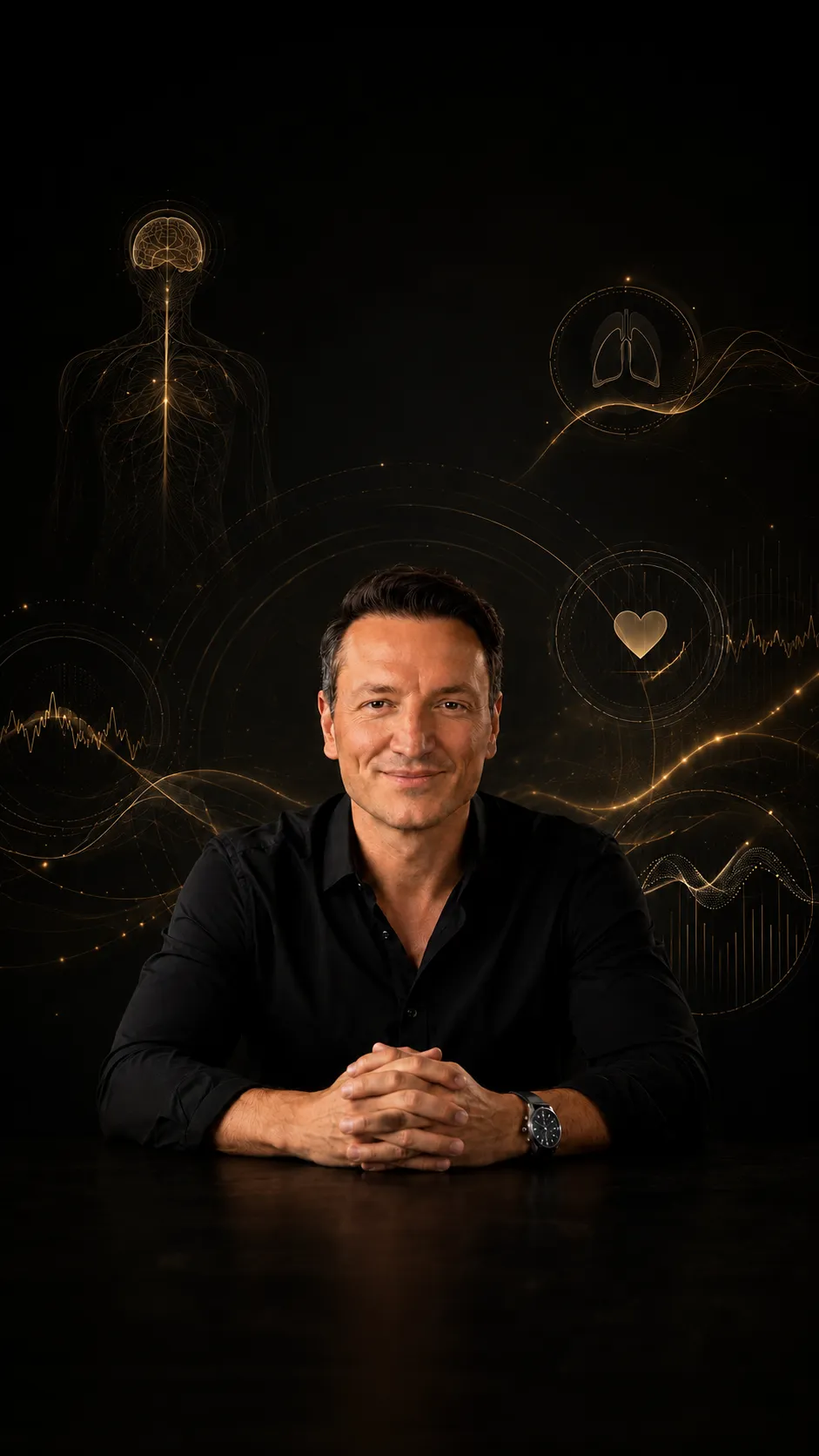
Hi, I'm Patrick
I am an integrative health coach in Stuttgart and online. At the same time, I still work as a Director in the international automotive sector and have spent more than half of my career in China.
I work with people whose lives demand a lot of them and who notice that, day to day, they are often just functioning. They want more energy, more joy in life and real moments again, instead of letting life pass them by on autopilot.
My approach is simple: I do not only look at what is visible right now, but at how things connect. Work, relationships, habits, physical signals and the inner patterns behind them.
I know this way of thinking from my professional life. When something does not work in a complex system, the cause is often not where the problem first becomes visible. At some point, I had to turn exactly this lens on myself.
An accident in the Philippines, two surgeries and the physical consequences afterwards made me stop seeing my own body as a collection of separate problems, and start seeing it as part of a larger whole.
That is exactly what I help others with today: finding out what really drives them, what throws them off balance and what needs to change so they can live more again instead of just functioning.
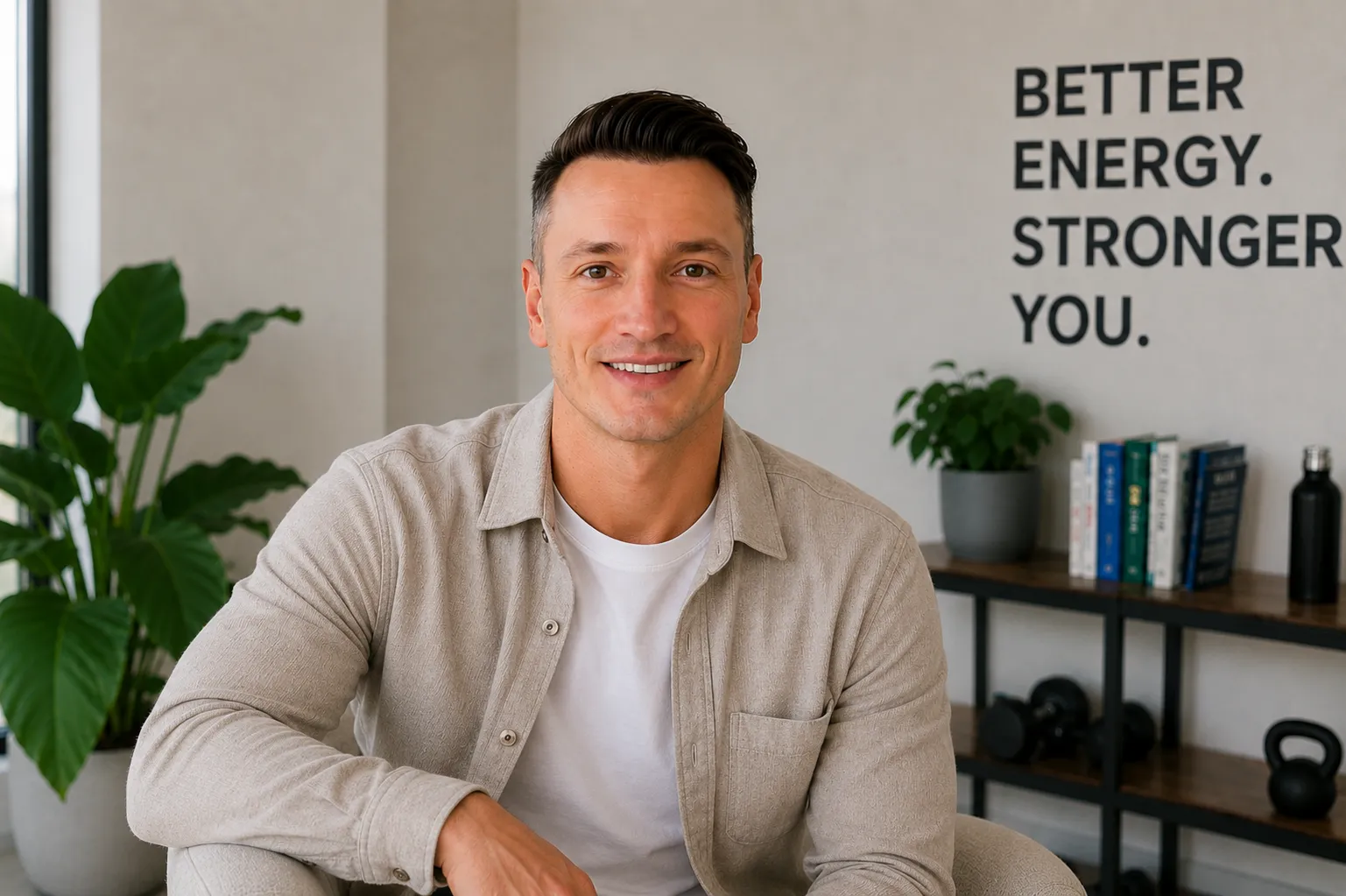
1. What got me far
Health coach was not my first career. I made my way in the corporate world and worked my way up to Director in the international automotive sector.
I spent more than half of my career in China, in international teams, across several sites and in an environment where things rarely go according to plan. There I learned not to stop at the surface. When something does not work, I am not only interested in what is going wrong. I want to know why. What is connected? What happened before? What am I missing?
This way of thinking became so natural that I applied it to my own life too. If something does not work, I look closer. If it still does not work, I look even closer. And then, almost automatically, comes the thought:
Then I just have to do even more.
Understand more. Control more.
That often worked. Until I ran into a problem where this way of thinking alone was no longer enough.

2. An accident that changed more than my arm
On a trip through the Philippines, I went for a run one evening in El Nido. After ten kilometres I still had energy and spontaneously joined someone doing sprints on the beach. A few minutes later, I caught my foot on a rope used to moor the small boats on the beach.
My left forearm was badly broken.
There was no ambulance. The nearest clinic could not operate on me. So it was five hours over bumpy roads to the next hospital. Around 15 hours after the fall, I was on the operating table. Later came a second surgery and antibiotics over a longer period.
My arm healed well.
But something else was only just beginning.

3. The arm healed. My gut did not.
After the antibiotics, my digestion reacted to things I had barely thought about before. Restaurant food. Highly processed food. Sometimes almost anything that did not come from my own kitchen. Diarrhoea often followed, at times daily.
Food was suddenly no longer just food. With every meal, my head was running along: What was in it? Can I tolerate this? How will I feel later?
At some point, just the thought of having eaten something "unhealthy" was enough to make me feel bad.
Understandably, the doctor visits focused on the problem in front of me at that moment. What I was missing was the full picture: the accident, the surgeries, the antibiotics, my daily life, stress, movement, sleep, nutrition. I did not only want to know what I could do about it. I wanted to understand why my body was reacting like this in the first place.
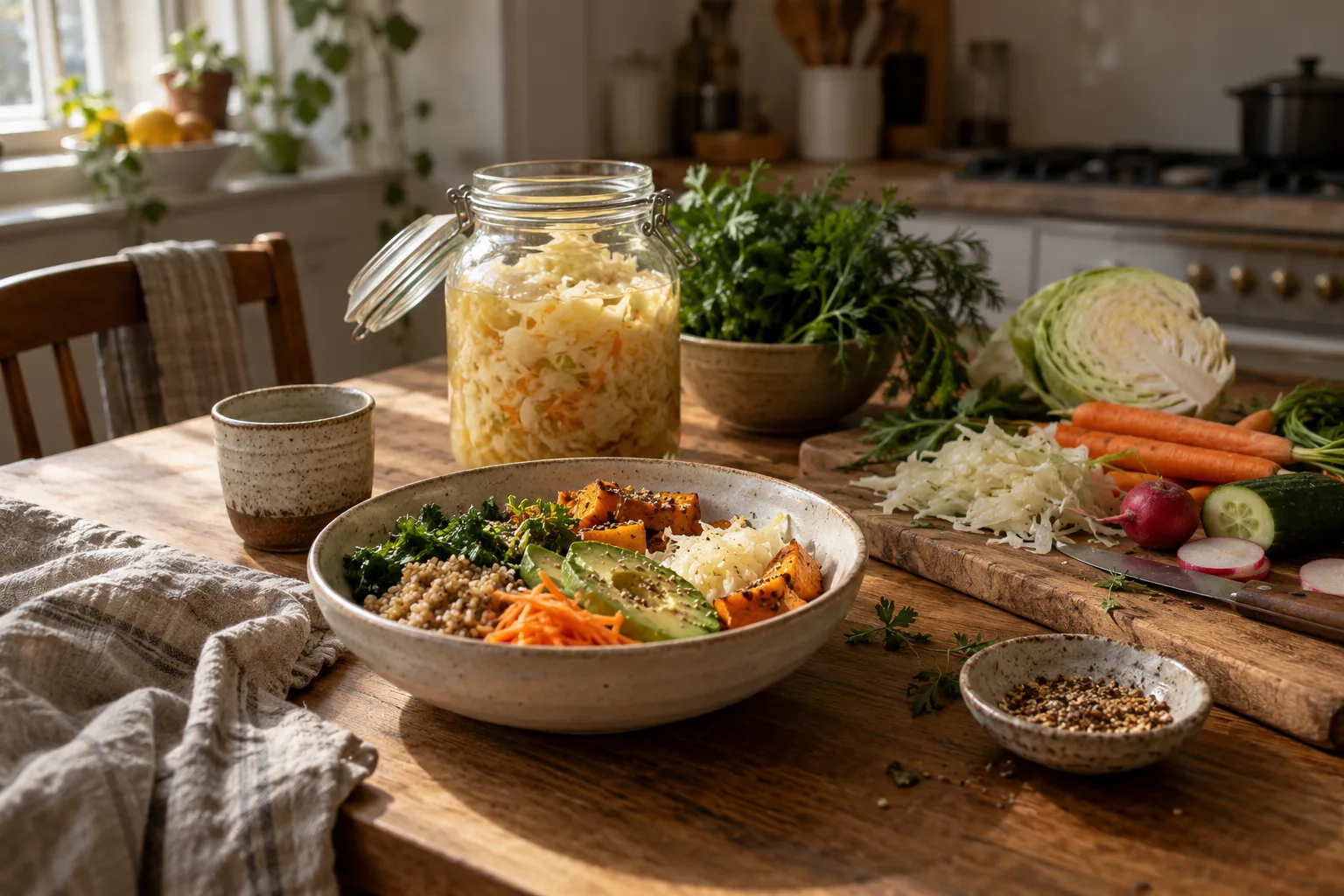
So I started observing myself. I cooked fresh at home more often again and added fermented foods. Over six to twelve months, my digestion became much more stable. But I also noticed: when several things came together, little movement, a lot of alcohol, little recovery, my body became sensitive again.
That led me to a question that later changed a lot:
What if the visible problem is only one part of a bigger connection?
4. I wanted to learn to see the whole system
I knew this question from my professional life. When a fault shows up somewhere, the cause is often somewhere else entirely. Why should it be any different with people?
That is why the Institute for Integrative Nutrition appealed to me. There, health is not reduced to a single topic. The Circle of Life looks at twelve areas of life, including relationships, work, movement, joy and spirituality. Just as important to me was bio-individuality: what works brilliantly for one person can be completely wrong for another. With food, but also in daily life, in relationships, at work, in what weighs on us and in what does us good.
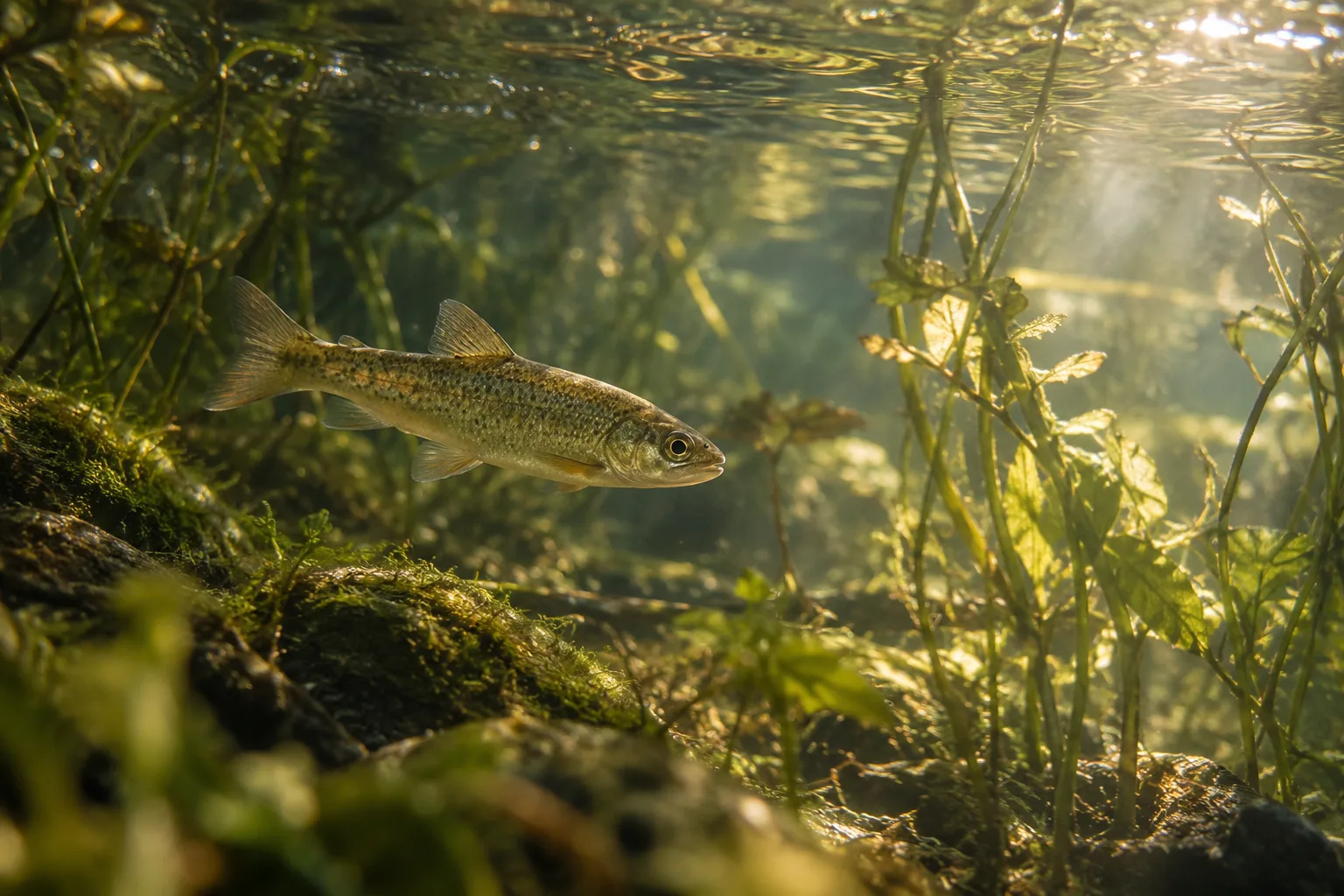
The image I still like best for this is very simple: you can give the fish the best food. If the water is toxic, it will still get sick.
We often spend all our time thinking about the food.
I wanted to learn to see the water too.
5. It was not only about the body
The more I dealt with health, the more often I ran into the same limit. You can improve your diet, sleep better, exercise more, try supplements. And still, sometimes something remains. Not necessarily a symptom. More of a pattern.
For me, one of these patterns was very clear: when something does not work, I want to solve it. When something stays open, I get restless. When I reach a goal, the next one is often already in front of me. For a long time I simply took this for ambition. And to some extent, it is. But the more interesting question was no longer what I want to achieve next. Instead:
Why do I need the next goal so quickly in the first place?
I had worked for almost ten years towards becoming a Director. As a young engineer, that was one of those goals where you think: once I get there, something will feel different. Then the contract was actually in front of me. Of course I was happy.
But surprisingly quickly, everything was back to normal.
My position had changed. I had not.

That was an important moment. Because I started to look not only at my goals, but at what drives me towards them. Why is letting go hard for me? Why do I want to control things? Why is it sometimes hard for me to accept help? Why do I hold on to some things even though I have long noticed they are not good for me?
These questions had little to do with nutrition. But a lot to do with how I live.

6. I did not want to become less ambitious
One thing was important to me.
I did not want to learn to want less.
I like challenges. I like building things. I like sport, growth and difficult problems. All of that is part of me, and much of it has given me a lot. So it was never about getting rid of ambition. It was about noticing when I decide and when an old pattern decides for me.
It is still not perfect today. Losing control is still hard for me. When something remains unsolved, I feel the urge to step in. Accepting help is not always easy. And when someone does something differently than I would, my first impulse is sometimes still:
Then I will just do it myself.
But today I see this impulse earlier. And that creates something I often lacked before: a choice. I can let go, even though part of me wants to control. I can give someone else space, even though I would do it differently. I can reach a goal without immediately having to turn it into the next one.
Not always. But more and more often.
A lot has changed physically too. Today I can concentrate for much longer, without those strong crashes. My digestion is far more stable than it was back then. And I know my body better. Not because I control it perfectly. But because I notice faster when something gets out of balance.
7. Why I coach today
Over time, I realised that exactly this mix is my strength. I think in a structured way, look for connections and quickly notice when two parts of a story do not fit together. And I have experienced myself how different problems can look: physical, professional, in relationships, in your own head.
That is why I do not start coaching with a ready-made plan. I start with your story. We look at the whole picture, from work and relationships to your inner drivers, and at the things that keep repeating. Then we look for the knot in the net. Not as a diagnosis. But as a pattern that may explain why you keep ending up in the same place.
Sometimes it is something very practical, a daily life that allows no recovery. Sometimes a relationship, a habit, a demand you place on yourself. Or an inner sentence that has been quietly shaping your decisions for years. That is why I do not believe in one plan for everyone. People are different, their stories are different, and so the path has to be different too.
My goal is not to make your life smaller or quieter.
My goal is that you decide again. Not your old pattern.

8. If you recognise yourself in this
Today I continue to work in a demanding corporate environment and, at the same time, as an integrative health coach. In the 12-Week Regulation System, I work 1:1 for twelve weeks with people who feel that somewhere, something no longer quite fits together. We meet weekly by video, there is support between sessions, and after six weeks a money-back checkpoint. In Stuttgart and online.
Before our first conversation, you do not need to know exactly what your "problem" is. Often that is exactly the point. Maybe all you know is:
I do not want to keep going the way things are going right now.
Then we look at it together. Without a ready-made answer. Without a standard plan. And without the expectation that you already have to know where to start.