Knowledge · Body and mind
How trauma shows up in everyday life
How to recognise old wounds in your own behaviour, and why that isn't a judgement but a beginning. Based on a session with the physician Gabor Maté.
Trauma rarely shows up in daily life as a memory. It shows up as a pattern: withdrawing when someone gets close, over-adapting, irritability, constant alertness. These patterns were once useful protection and still run automatically. You recognise them when a reaction is stronger than the situation calls for.
- Much of what we take to be our personality is, according to Gabor Maté, an imprint of old wounds. Perfectionism, always being nice, or the need for control are often less character than adaptation.
- A wound reacts in two ways. Left open, it hurts at every touch, often through words. Scarred over, it becomes hard, feels less, and does not grow with us, so a part of us stays stuck at the age of the injury.
- Being triggered has a biological basis. Under heavy load, the reflective front part of the brain goes offline and we react from an older, faster part, that is, to the past rather than the present.
- Recognising these patterns matters more than hunting for the cause. It's not about a label, it's about seeing how something shows up today.
- Healing means laying down new pathways in the nervous system, the way you cut a new path through dense terrain. And as in Japanese Kintsugi, the break isn't hidden but becomes a line of gold.
Reading time about 11 minutes.
The starting point
What we call personality
Many traits we take to be our essence are, according to Gabor Maté, imprints. Personality is not who we are, but who we believe we have to be, often shaped by needs that went unmet early on (Gabor Maté, "The Myth of Normal").
That isn't bad news. What was once an adaptation can be understood, and what can be understood can be changed. This piece points to the everyday traces of old wounds and offers a self-check. Not as a test and not as a diagnosis, just a calm look at yourself.
How a wound reacts
The open wound and the scar
The word trauma literally means wound. And a wound behaves in two ways, both of which show how trauma works in everyday life (Gabor Maté, "The Myth of Normal").
The open wound stays unhealed. Touch a healthy area and you feel nothing. Touch a wound and it hurts sharply. With emotional wounds, that touch often comes through words. A single sentence can trigger pain in you that it would never trigger in someone else.
The scar is the second way. Scar tissue knits the wound together, but it is hard, feels less because it lacks nerve endings, and does not grow along. Translated: where we are scarred we are harder and less touchable, we sense less of what is happening inside us, and a part of us stays stuck at the age of the injury. When someone says, don't be so childish, they sometimes hit exactly the spot that could not keep growing.
Open wound and scar: two ways an injury keeps working in everyday life. AI generated infographic.
Why we get triggered
When the reflective part goes offline
Being triggered is more than a figure of speech, it has a biological basis. The front of the cortex enables what specialists call response flexibility, that is, choosing the fitting response to the present from several options (Gabor Maté, "The Myth of Normal").
Under heavy, uncontrollable load, high levels of messenger chemicals weaken exactly this front area, while older, faster regions take over (Arnsten, Nature Reviews Neuroscience, 2009). The reflective part goes offline, so to speak, and we react from a more primitive, more defensive part of the brain. In that moment we're not answering what's happening now but something that was long ago. That is the core of being triggered.
Front part (reflective) offline, older part (fast, reactive) active. Reaction to the past. AI generated infographic.
Self-check
How to recognise old imprints
Maté names a set of patterns through which old wounds can show themselves. The list below is not a test and not a diagnosis. It is a recognition tool. More important than where something comes from is how it shows up today (Gabor Maté, "The Myth of Normal").
The patterns fall roughly into three groups. The first is about how you think and feel about yourself inside. You often feel ashamed of yourself or guilty. You constantly compare yourself with others and end up feeling inferior or superior. You carry a quiet hopelessness that joy, peace, or freedom aren't really possible for you. Or you're compulsively optimistic, on the outside everything is always okay, even when it isn't.
The second group shows up in reactions and relationships. You get triggered quickly and react more strongly than the situation warrants. Anger or rage bursts out of you, out of proportion to the trigger. You repeat patterns that harm you, such as neglecting yourself. You stay in relationships that aren't good for you. And you're often highly critical or judgemental of others.
The third group are strategies you used early on to secure a place for yourself. You feel driven to draw attention, through looks, volume, or cleverness. You always have to be nice and hold yourself back. You have to help in order to feel important. You have a critical relationship with your body and check yourself often. You are perfectionist and struggle when something isn't perfect. And you have a strong need for control, out of fear that otherwise something will go wrong.
Take your time and tick what you recognise in yourself. Hover over a chip if you want to see the full sentence again. With each item, a crack in the bowl fills with gold. That's the idea: what you recognise doesn't become a flaw, it becomes a line of gold.
The cracks don't form now. They only become visible.
Choose what you recognise in yourself. It isn't about right or wrong.
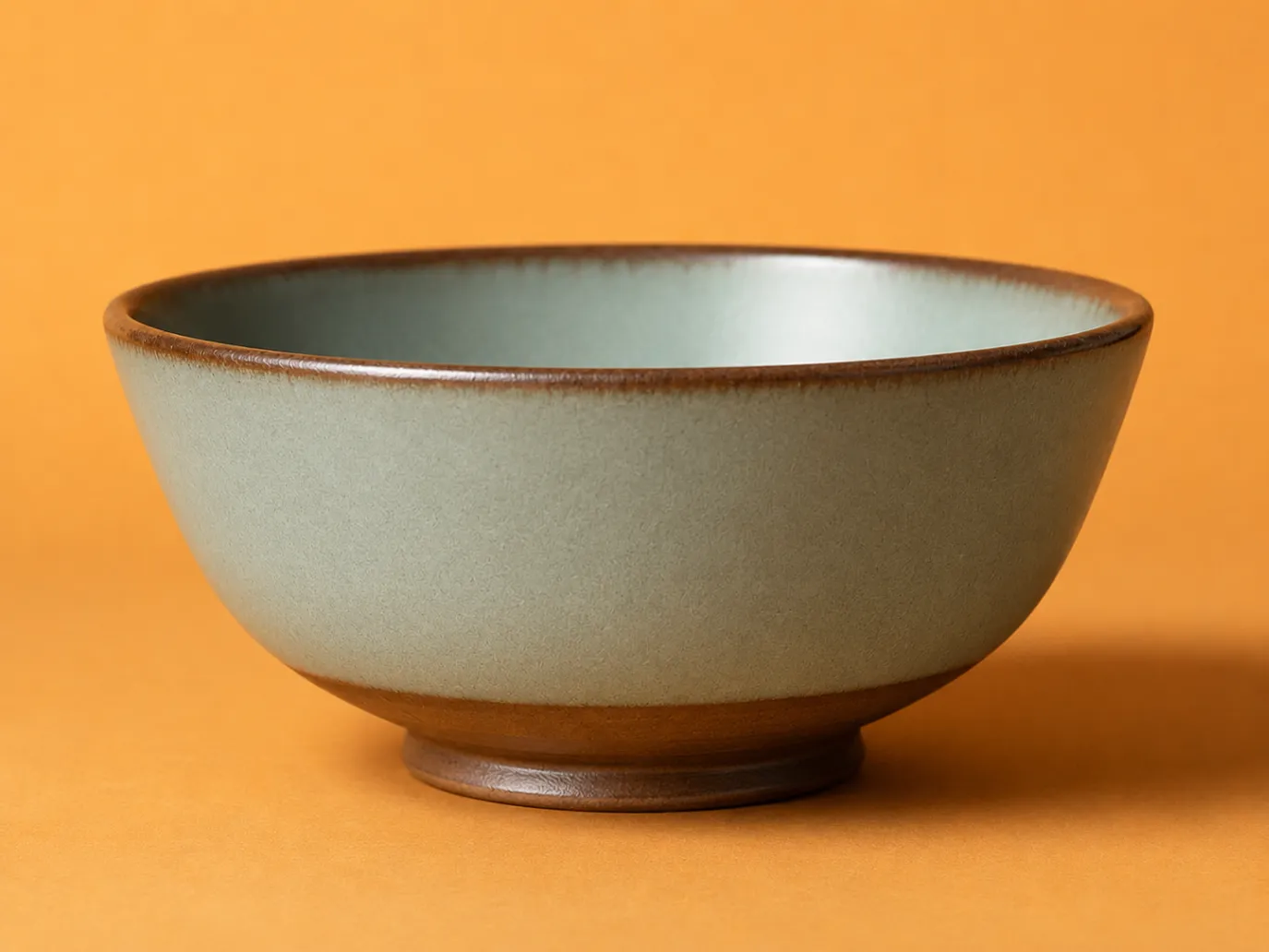
More becomes visible. In a moment you'll place it, without judging yourself for it.
0 of 4
Whatever you ticked, it says nothing about your worth. It shows where you once adapted in order to get through. The psychiatrist Mark Epstein puts it well: it's less important to find the cause of the feelings than to learn how to relate to them (Mark Epstein, "The Trauma of Everyday Life"). The present counts more than the past.
Personality as adaptation
Missing needs become traits
Why does a wound become a trait? Maté describes it with examples. A child who was not simply noticed for their existence may become driven to draw attention, through looks, volume, or cleverness. Someone who wasn't liked as they were may become especially charming or especially nice, suppressing their own self in the process. Someone who was never allowed to feel important may become the tireless helper (Gabor Maté, "The Myth of Normal").
Maté cites his own drive as a doctor as an example, fed by a need to be important that he himself did not see for a long time. The trait is then not a character flaw but an old solution to an old problem.
Unmet need, adaptation, trait. Examples: charming, always nice, the helper. AI generated infographic.
Exercise
The event and its imprints
Maté guides a writing exercise that makes an imprint visible. Ideally with pen and paper, writing about difficult experiences is associated in studies with measurable improvements in health and mood (Meta-analysis on expressive writing, 2009).
- Take a sheet of paper and write a difficult event on the left, large or small. For example lack of help, not being accepted, a parent with an addiction.
- Divide the right side into four fields: Body, Personality, Behaviour, Relationships.
- In each field, write how that event shows up there today. In the body as tension or pain, in personality, in behaviour, in your relationships.
- Repeat this for a few events. Keep your attention in your body and notice what stirs while you write.
Writing can also be briefly demanding. If it becomes too much, pause. For lasting distress, professional support is wise.
How healing works
A new path through dense terrain
Why is change possible but hard at first? The brain remains shapeable into adulthood, it can form new connections, which research calls neuroplasticity (Neuroplasticity, overview, StatPearls).
A picture for this is a path through dense terrain. The old paths, laid down in childhood to survive, such as shutting down, being nice, or vigilance, are long since broadly trodden and therefore easiest to walk. The brain always chooses the easiest way, even when it isn't the healthiest. Healing means cutting a new path, hard the first time, easier each time after, until the new way becomes the natural one. Only then has it become second nature.
The old survival path is broad and easy, the new path becomes more walkable each time. AI generated infographic.
The break as a golden line
Kintsugi
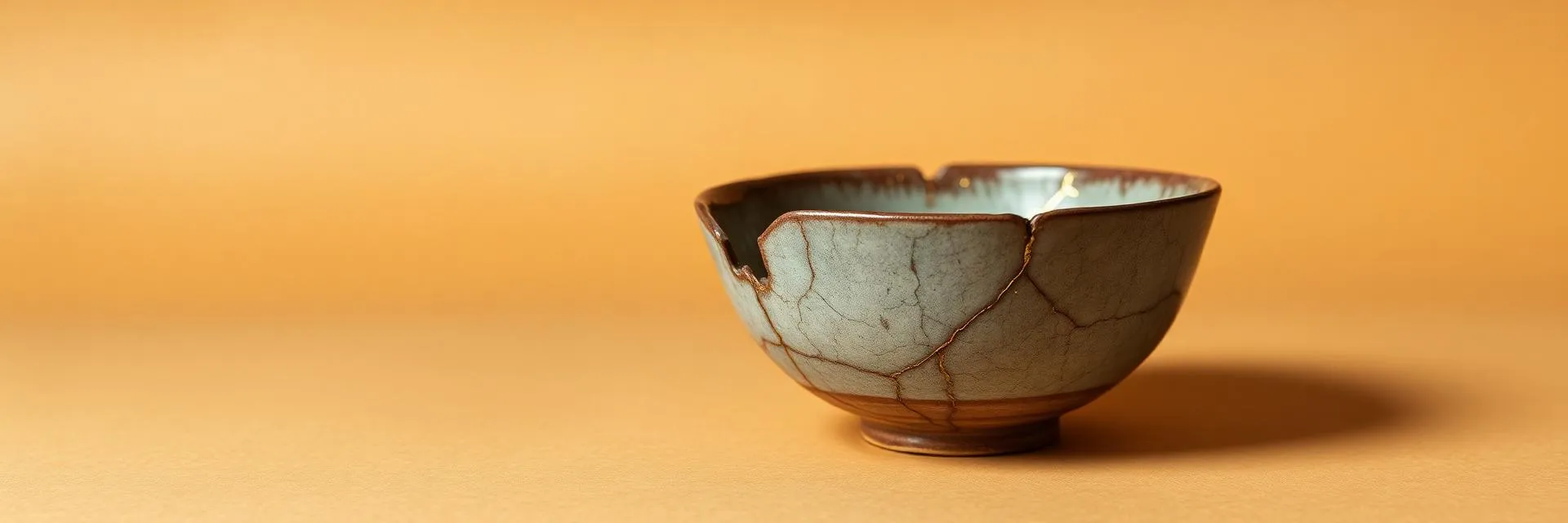
In Japan there is a repair art called Kintsugi. When a bowl breaks, it isn't glued so the seams stay hidden. Instead the cracks are filled with a lacquer made of gold powder, so glowing lines run through the object.
The break isn't treated as a flaw to conceal but as part of the object's history. Sometimes it makes it even more beautiful than before. That is the image at the top of this article and the one that filled in during your self-check. The wound doesn't disappear. It becomes a line of gold, and the whole isn't broken afterwards, it is, in its own way, more healed.
Placing it
Recognise, don't label
A self-check like this is a mirror, not a verdict. Many items that ring true don't mean something is wrong with a person, they show how much they have carried and survived. Maté stresses that recognising the patterns matters more than pinning down the exact cause, and that answers surface by themselves when someone is ready (Gabor Maté, "The Myth of Normal").
If a lot of this stays with you or weighs on you, a conversation with a professional can be a good next step. Not because something is wrong with you, but because no one has to carry their wounds alone.
Sources
Sources
- Gabor Maté, The Myth of Normal, 2022
- Gabor Maté, When the Body Says No
- Amy Arnsten, Stress signalling pathways that impair prefrontal cortex structure and function, Nature Reviews Neuroscience, 2009
- Meta-analysis, Health effects of expressive writing on stressful or traumatic experiences, 2009
- Neuroplasticity, overview, StatPearls, NCBI
- Mark Epstein, The Trauma of Everyday Life
This article reflects statements from a public session with Gabor Maté and is provided for information. It is not a diagnosis and does not replace professional support.