
You don't hate exercise. You hate what it was turned into.
Somewhere along the way, moving your body became a punishment. Something you do to fix yourself, burn something off, earn your food. No wonder you avoid it. That was never what movement was for.
The reason you keep quitting isn't laziness.
Think about how movement gets sold to you. Burn the calories. Crush the workout. No pain, no gain. Earn your cheat meal. Every message frames your body as a problem and exercise as the punishment.
Of course you quit. Who keeps showing up to be punished?
Here is the truth almost nobody in the fitness world will tell you. When movement is about shrinking your body, it becomes a joyless transaction, and people drop it fast. When movement is about feeling better, it becomes something you actually want to do.
This is not soft talk. It is one of the most practical things you can understand about your own body. Stop moving to fix how you look. Start moving to change how you feel. Everything gets easier from there.
Here is what changes the moment you stop moving to fix yourself and start moving to feel better:
- Burn it off. Earn it back.
- Push through. No pain, no gain.
- Your body is the problem.
- How do I feel after?
- What would feel kind today?
- My body is worth taking care of.
Movement is the closest thing we have to a free medicine.
This is not motivational fluff. The science on movement and how you feel is some of the strongest in all of health. In January 2026, NPR reported on research showing that for many people, exercise can relieve depression as effectively as medication. And a 2025 systematic review in Frontiers in Public Health found that gentle movement, things like walking, yoga, and tai chi, helps prevent depression as people age.
Basically here is what they found. You do not need to destroy yourself in a gym. Gentle, regular movement does most of the work. A walk counts. And the benefits are not mainly about your body, they are about your mind.
Here is what is actually happening when you move, even a little:
What one walk actually gives you.
Notice what is not on that list. Nothing about shrinking. Nothing about a number on a scale. Those benefits show up whether or not your body ever changes shape. That is the whole point. The good stuff is not waiting on the other side of a transformation. It starts the first time you move with a different intention.
Every time you move, you tell yourself something.
Here is the layer underneath all the chemistry. The way you move, or do not move, sends a message to yourself about how you see yourself.
When you drag yourself through a punishing workout you hate, the quiet message is "my body is wrong and I have to fix it." When you take a walk because it feels good, the message is "my body is worth taking care of."
Same body. Completely different conversation.
A 2025 review found that regular movement reliably improves self-esteem, the sense that you value and believe in yourself. Not through changing your appearance, but through the simple, repeated act of showing up for yourself. You are not earning the right to like your body. You are practicing it.
This is why the goal of movement, the real one, is not a body you can finally accept. It is a relationship with your body that does not depend on how it looks today.
"Exercise has helped me shift my mind, not my body."
The musician Lizzo, who has been under more public pressure about her body than almost anyone, said something about this that is worth sitting with. She said that once she started working out for her mental health, for the endorphins, so she would not look in the mirror and feel ashamed, "exercise has helped me shift my mind, not my body."
She went further. She said her body is going to change, like everyone's does, because that is what being human is. But the thing she actually has power over, she said, pointing to her head, is her mind. "If this ain't happy, none of this is happy."
Basically, here is what she figured out. The win was never the body. The win was the relationship with herself. The body changes, or it does not. The peace is the prize.
That is a person at the center of the world's harshest body commentary, saying the same thing that is true for the rest of us.
You don't need a plan. You need a new question.
I am not going to hand you a workout. Honestly, the best movement for you is the one you will actually keep doing, and only you can find that, usually by trying things and noticing what feels good. That is the work we do together.
But here are four small shifts in how you think about it. Not tasks. Just gentle changes of direction:
When you want to make this stick.
For a lot of people, just changing the why behind movement is enough to change everything. Try it. Move because it feels good and see what happens.
But if your relationship with movement and your body has been a long, hard one, if every past attempt has ended in the same place, that is a signal that the issue is deeper than motivation, and you do not have to untangle it alone.
That is the work I do. Not a workout plan. We look at your real relationship with your body and with movement, and we rebuild it together, in a way that fits your actual life, so it finally lasts. The plan comes from you. I help you find it.
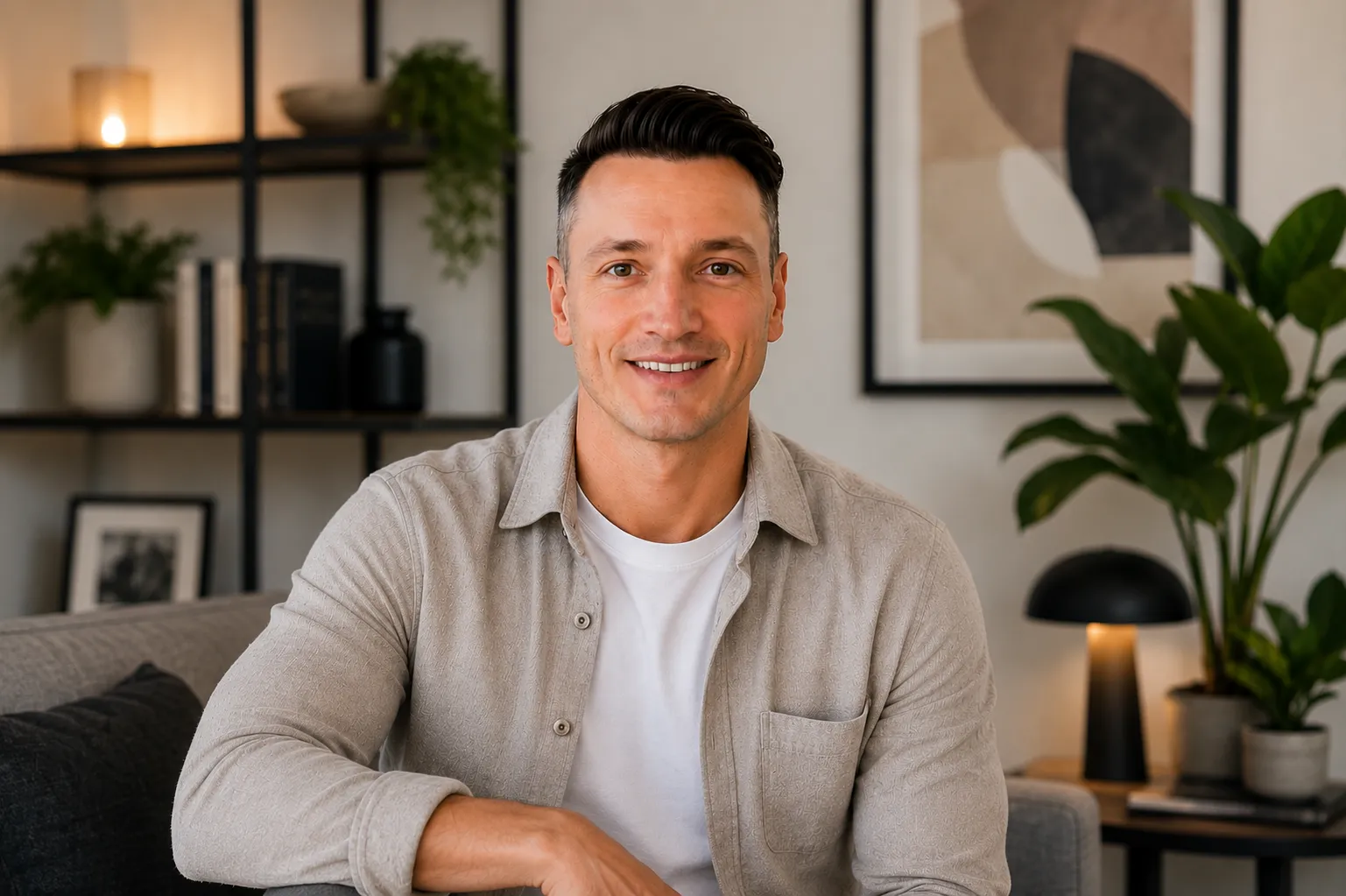
I used to move to punish myself. Now I move to think.
For years, movement for me was about pushing, performing, earning. It was just another thing to be good at, another way to be hard on myself.
What changed everything was the day movement became the thing that cleared my head instead of the thing that drained me. A walk to think. Movement as a reset, not a punishment. That shift is what I help other people find.
Let's change the conversation with your body.
A free Clarity Call to look at your real relationship with movement and your body, and whether working together is a fit. No pressure, no number to react to before we know we can help each other.
- Exercise relieves depression as effectively as medication, study finds. NPR, January 2026. npr.org
- Exercise-based prevention of depression in middle-aged and older adults. Frontiers in Public Health, 2025 (systematic review and meta-analysis). frontiersin.org
- How to improve your mental health using physical activity. Mental Health Foundation. mentalhealth.org.uk
- Lizzo on exercising for mental health, not weight loss.
Educational content only, not medical advice. Patrick Labella is an integrative health coach, not a physician. Consult a qualified healthcare provider for guidance specific to you.
- When chronic stress turns into physical symptomsWhy training stops working under overload.
- Why am I so tired after I eat?Energy, meals and training timing.
- NutritionWhat makes movement effective at all.
- Sleep & RecoveryAdaptation happens in recovery.
If you would rather not sort this out alone: see how working together looks.